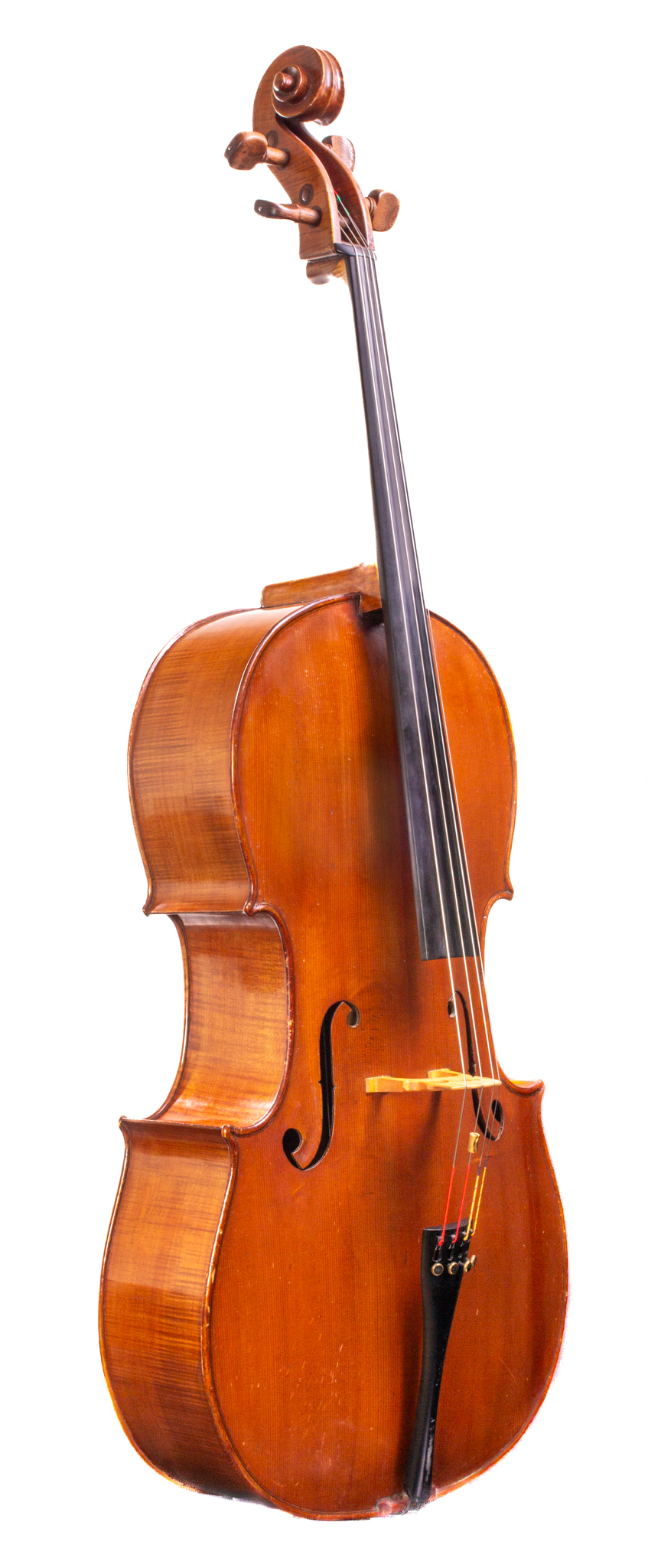
Dolce Violins carries Pernambuco cello bows for cellists seeking a bow to match their cello, playing style, and weight and balance preferences. Our collection includes fine antique French cello bows, German cello bows and English cello bows. We also carry the best cello bows from award winning modern bow makers including Eric Gagne, Lucie Martinie, Ulf Johansson and others. Whether you want an Arcos Brasil cello bow or a rare French cello bow, Dolce Violins has the right bow for you.
Choosing a cello bow is best done by playing several examples on your own instrument. While preferences vary, players often evaluate bows using a few shared physical characteristics.
Balance The balance point affects how the bow feels in the hand and how weight is distributed between the frog and the tip. A well-matched balance can make control and articulation feel more natural to the player.
Strength and Flexibility A bow’s stiffness influences how it responds to the string under normal playing tension. Some bows feel firmer, while others flex more easily; neither is inherently better, and the relationship between strength and flexibility varies from bow to bow.
Weight Most cello bows fall within a similar weight range, though small differences can affect comfort and handling. Weight should be considered together with balance rather than on its own.
Materials Cello bows are commonly made from pernambuco, , ipe, brazilwood, or modern composite materials such as carbon fiber. Each material has different physical properties, and selection is largely a matter of player preference.
Because these factors interact differently with each instrument and player, comparing multiple bows—ideally in person or through a home trial—remains the most reliable way to choose. For a more detailed discussion of balance, weight, and materials, see our buying guide: How to Choose a Cello Bow.